AI makes learning faster — but in 2026, it’s all about content
Blog | AI elearning

Real learning doesn’t start with knowing, but with listening. With daring to ask questions, to doubt, to explore. In a time when AI mainly provides answers, we must learn to keep asking the right questions.
But how do we avoid falling into the trap of fast, superficial answers in 2026? How do we keep learning relevant, meaningful, and human?
That is the challenge ahead of us: how do we use AI to make learning more efficient, without losing the essence of real learning?
Looking back at 2025: speed without depth
2025 was the year of the AI hype. And that’s not necessarily a bad thing — hypes accelerate change. Thanks to AI, we can now do in minutes what used to take days or weeks. Where you once needed a full team to produce a training video, a smart tool can now do this automatically.
That is a huge step forward. AI saves time, costs, and barriers — and gives us something valuable in return: time. Time to go deeper, to improve, and to focus on content. We don’t need to let go of technology, but we do need to shift our focus: from the “how” to the “why”. Learning should make a real difference again.
But precisely because AI creates this space, we must ask ourselves: how do we avoid ending up with speed without depth in 2026? What is the next step?
The shift in 2026: from quantity to quality
In 2026, attention moves from production to meaning. Organizations are realizing that learning is not a race, but a journey. The question shifts from how fast we can create content to why we create it — and what employees actually gain from it.
Where does this shift come from? Not out of nowhere. Three developments from 2025 set the tone:
AI overload in learning According to the Deloitte Human Capital Trends Report 2025, 62% of organizations used AI to generate learning content, but only 27% felt it improved learning quality. LinkedIn Learning also observed that employees experienced “more learning content, but less learning value.” AI made learning more efficient — but often also more superficial.
Renewed focus on ethics and trust With the introduction of the EU AI Act at the end of 2025, “responsible AI” became a central theme. Organizations are realizing that transparency about algorithms and data usage is becoming a prerequisite for credible learning. Integration of learning and communication Gartner’s Connected Learning Workplace Report (2025) shows that 70% of organizations aim to integrate their learning and communication systems by 2026. Learning is moving into the flow of work: short, contextual, and woven into daily interactions.
Together, these developments form a clear pattern: 2025 was the year of experimenting with AI; 2026 will be the year of depth.
The question is no longer whether we use AI in learning, but how. In 2026, the focus shifts from tools to principles. Three trends show how organizations are shaping this transition.
Three AI trends that will change learning in 2026
AI doesn’t just change what we learn, but also how we learn. In 2026, three key developments stand out: technology that supports people, transparency that builds trust, and workplaces where learning and communication come together.
Human-centered AI The focus shifts from “AI replaces the trainer” to “AI supports the learner.” Smart platforms combine technology with human guidance. As Harvard professor Chris Dede puts it: “AI should be the coach, not the player.”
Data ethics as the standard After the privacy wave of 2025, trust is now central. The EU AI Act requires organizations to show how algorithms work. Those who are transparent about data and decisions earn employee trust.
Learning equals communication This is one I personally find very interesting. Learning, sharing, and collaborating increasingly blend together. Where intranets, LMSs, and chat tools once stood apart, a single digital work environment is now emerging — one where knowledge sharing, feedback, and microlearning reinforce each other. Learning moves into the flow of work: short, relevant, and embedded in daily interactions.
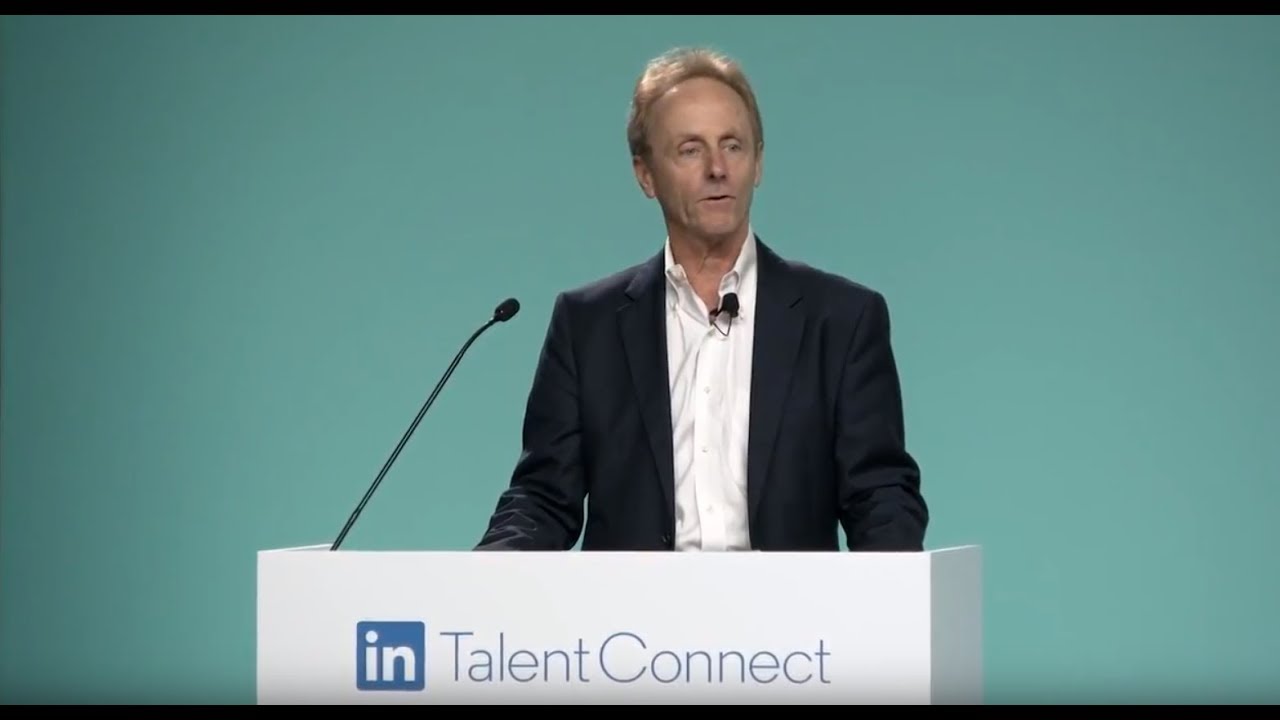
As early as 2018 (!), Josh Bersin introduced the idea that real learning happens in the flow of work — integrated into daily work, not outside of it. In 2026, this idea becomes more relevant than ever. You can watch his video on Learning in the Flow of Work for more insight.
The new role of L&D and communication: from creator to guide
These developments don’t just change how we learn — they also change who takes the lead. What does this mean for the people who work with learning and communication every day: L&D and communication professionals?
The role of the L&D professional is fundamentally changing. Where 2025 was about producing, 2026 is about interpreting. Not everything AI generates deserves a place in the library.
The learning professional becomes the guide: the one who decides what is relevant, what is correct, and what fits the organization’s culture. Internal communication takes a seat at the table as well. Meaning only emerges when learning connects to real practice. When people share experiences, give each other feedback, and learn from what went well — and what didn’t — knowledge gains real value.
What organizations need to do in 2026
Organizations that want to take the next step in 2026 need to make three strategic choices:
From tool to strategy AI is not a project; it is part of your learning strategy. First define why you use AI: to save time, improve quality, or increase inclusion. Only then should you choose tools.
Rediscover the human scale AI can make learning faster, but not more human. Technology supports — but real growth happens when people have space to reflect, experiment, and learn together.
Invest in digital ethics and trust Transparency about data, sources, and AI decisions becomes crucial. Not only legally, but morally. Employees need to know their learning data is safe — and works in their favor.
Finally: AI learns fast, people learn better
The future of learning lies not in technology or people alone, but in how they strengthen each other. Meaning doesn’t arise in systems, but in conversations — where experiences are shared, feedback is given, and lessons are learned from both success and failure.
That’s also where learning and internal communication meet.
I’ve worked at Fellow Digitals for years, where we develop both a powerful intranet (for internal communication) and an LMS (for learning). This gives me a front-row view of how these two worlds are converging. The boundaries between learning, knowledge sharing, and communication are fading fast — and it’s good to see technology following people, not the other way around.
And finally, a small piece of wisdom — in the spirit of Elke Wiss (Socrates on Sneakers): With AI, we risk appearing smarter without becoming wiser. Something to think about 😊
AI can speed up learning — but quality makes the difference. See how our LMS supports meaningful learning, embedded in daily work.

We love to share our knowledge with you
Related blogs