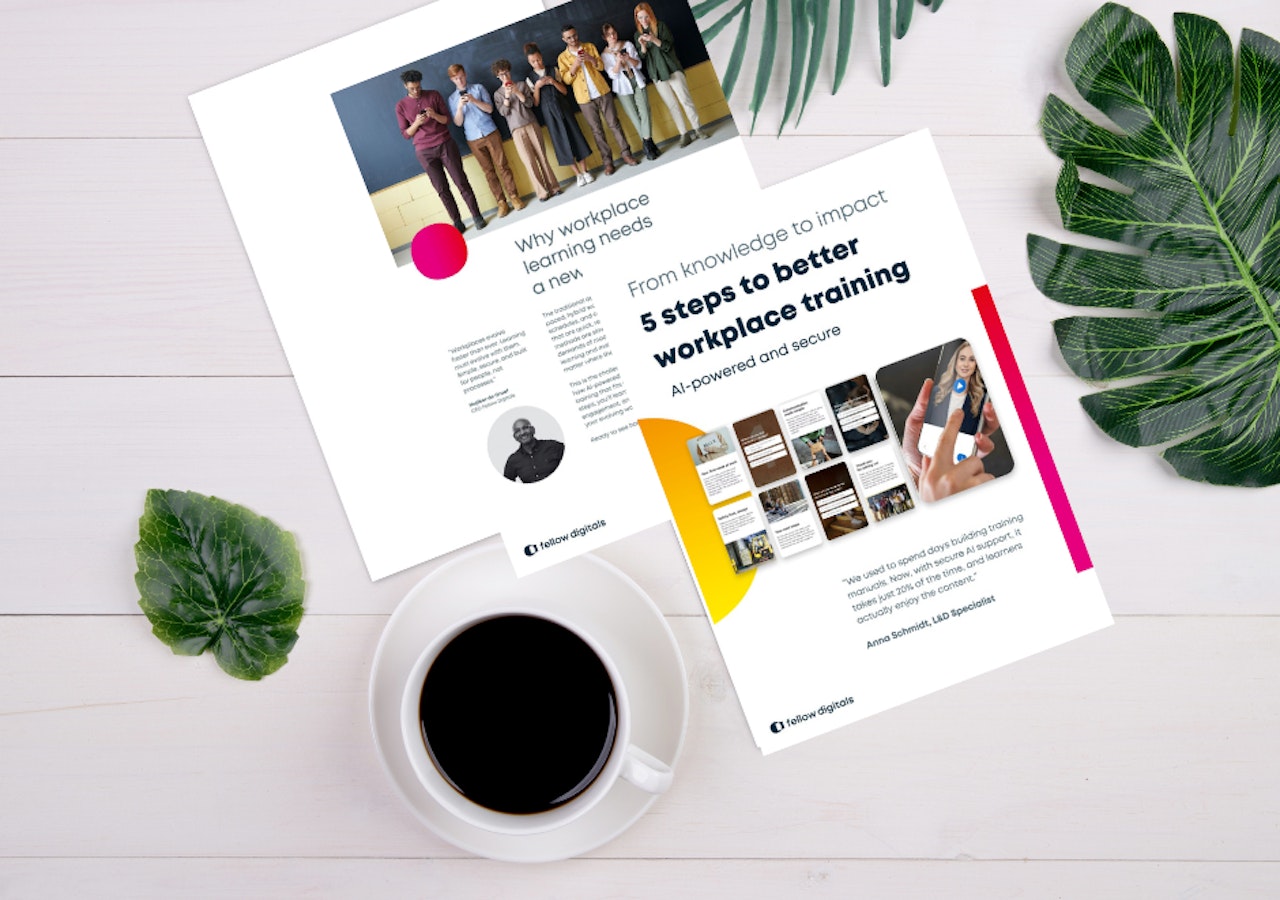
From knowledge to impact: 5 steps to better workplace training
Blog | Whitepaper

Why does so much workplace training still feel… forgettable?
PDFs that no one opens. Manuals that get skimmed once and forgotten. Training that exists but doesn’t really land. In today’s fast-paced, hybrid workplace, that simply isn’t enough.
Learning needs to be quick, relevant, and accessible to everyone — whether someone works behind a desk, on the shop floor, or on the move. That’s exactly why we created our latest whitepaper: “5 steps to better workplace training – AI-powered and secure.”
Here’s a preview of what those five steps look like in practice.
1. Start with what you already have
Most organizations don’t lack knowledge; they lack structure.
Policies, PowerPoints, safety manuals, onboarding documents… they’re all there. They’re just hard to find, hard to read, and even harder to remember.
The first step is simple: use what you already have. With AI as a smart assistant, long documents can be transformed into clear, bite-sized learning units that people actually finish. No more starting from scratch — just making existing knowledge usable.
2. Turn dry content into engaging learning
Learning sticks when people interact with it.
Instead of long texts, think:
short learning cards
quizzes with instant feedback
visuals that highlight what really matters
AI can help transform static content into multiple formats automatically, while you stay fully in control as editor. The result? Higher engagement, better completion rates, and learning that feels relevant instead of forced.
3. Show it, don’t just tell it
Not everyone learns by reading.
Visual formats, like short videos or AI-generated avatars, make complex topics easier to understand. Especially for frontline employees who prefer watching or listening over scrolling.
Showing a process, policy, or safety instruction often makes the difference between “I’ve seen it” and “I get it”.
4. One message, many languages
If your organisation operates across locations, consistency matters.
AI makes it possible to automatically translate learning content, quizzes, and even video scripts, while keeping everything centrally managed. This way, every team learns the same thing, in their own language and context.
Scalable learning starts with inclusion.
5. Improve continuously with real feedback
Learning isn’t a one-off project. It’s an ongoing process.
By testing courses with pilot groups and collecting feedback directly inside the learning environment, you keep improving what you offer. Small adjustments, more practical examples, clearer wording, can have a big impact on acceptance and results.
Learning that includes everyone
AI won’t replace people in learning. But used the right way, it supports them.
It helps you create training faster, keep quality consistent and make learning accessible to everyone - securely, transparently and always with people in control.
Curious how these five steps work in practice, including concrete examples and tips? Then the full whitepaper is your next step.
Because when learning works for everyone, everyone counts!

We love to share our knowledge with you
Related blogs