AI is changing work. HR must take the lead now
Blog | HR transformation
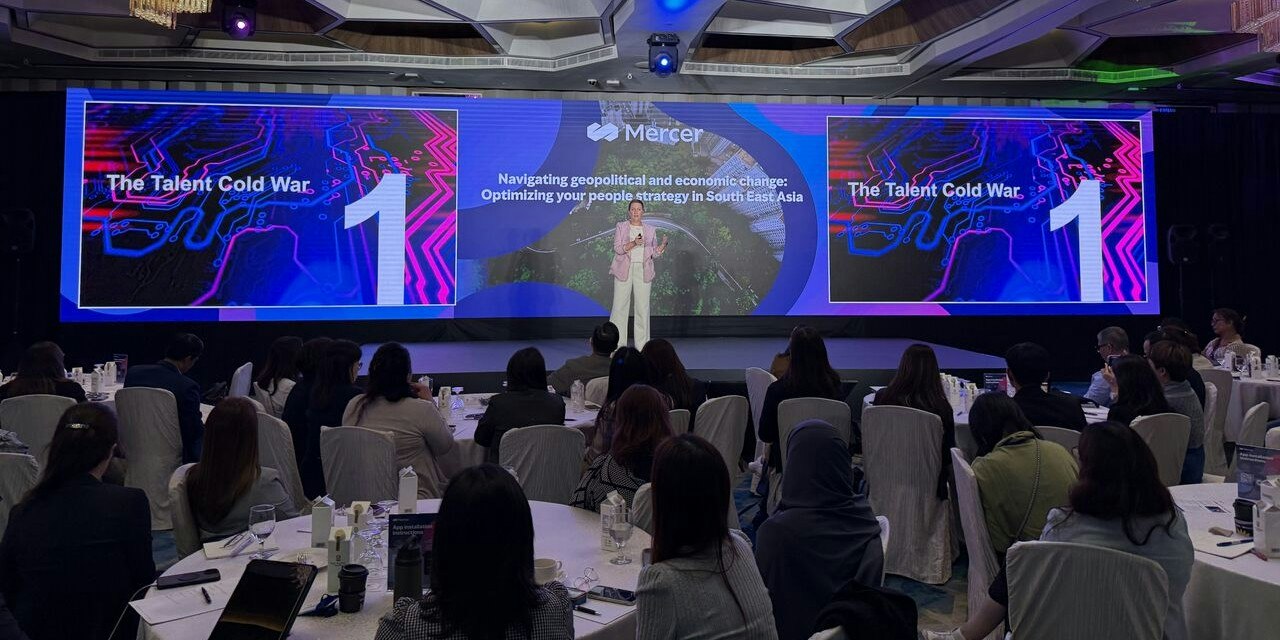
AI is now a reality in HR. The more important question is what organisations change once AI can take over part of the work. At the Asia HR Conference 2026 in Singapore, the conversation therefore moved beyond adoption and efficiency. The focus was on redesigning work, strengthening human capabilities and developing the skills employees need to keep pace with continuous change.
One question from Singapore stayed with us: if AI gives people time back, what should we do with that time?
Efficiency is only the beginning
The current use of AI within HR is still largely focused on speeding up existing processes. Figures for Southeast Asia presented at the conference by Mercer (Marsh since 1 September 2026) show that AI is being used for helpdesk automation (42%), employee feedback (39%), back-office processes (35%) and analytical reporting (35%).
These are valuable applications. They reduce repetitive work, shorten response times and make information more accessible. But they do not automatically improve how an organisation works. Automating an inefficient process may ultimately mean producing the same result faster.
Planned investments in Southeast Asia point to a next phase. Talent intelligence is on the agenda for 60%, while identifying skills gaps and redesigning work with AI are both priorities for 59%, followed by predictive workforce planning at 55%. The focus is shifting from individual tools to decisions about work, people and organisational capability.
Work redesign becomes the central challenge
Many organisations began their AI journey with pilots: a chatbot here, a productivity tool there and a growing number of separate use cases. Employees discovered what the technology could do. At the same time, it became clear why pilots alone rarely deliver lasting returns. Roles, handovers and approval processes often remained unchanged.
Mercer therefore identifies work redesign as a central priority for leaders. Organisations need to determine how human capabilities and automation can complement each other, and then adapt roles and workflows accordingly. The discussion is no longer only about which tasks AI can perform. HR must also establish which outcomes need to improve, where human judgement remains essential and how responsibility should be divided between people and systems.
Suppose an employee saves an hour every day thanks to AI. If that hour is immediately filled with more emails, more meetings or a higher output of the same work, the organisation has gained speed but may have created little additional value. When redesigning work, you deliberately decide where that freed-up capacity delivers more: better decisions, more contact with customers and colleagues, better guidance or more time for problems that have no standard answer.
Human capabilities determine the return on AI
A recurring question at the conference was what remains uniquely human when one person, supported by AI, can produce work that previously required a larger team. This does not mean people become less important. Their contribution changes.
AI can find, summarise, generate and organise information at remarkable speed. People still need to understand the context, assess the quality of an answer, weigh different interests and take responsibility for the outcome. They build trust, recognise what is left unsaid and guide others through uncertainty. As AI takes over more production work, judgement, creativity, relationships and leadership become increasingly important to the quality of work.
Technology alone will therefore never determine the success of an AI transformation. Organisations also need managers who can redesign workflows, employees who use AI critically and confidently, and a culture in which people can test new ways of working without losing sight of quality, safety and accountability.
The human dimension cannot be postponed until implementation. According to Mercer, only 19% of HR leaders consider the emotional impact of AI in their digital implementation strategy, while 62% of employees believe leaders underestimate that impact. If people fear becoming obsolete or do not understand how their role is changing, access to technology and a one-off training course will not be enough to build trust and genuine adoption.
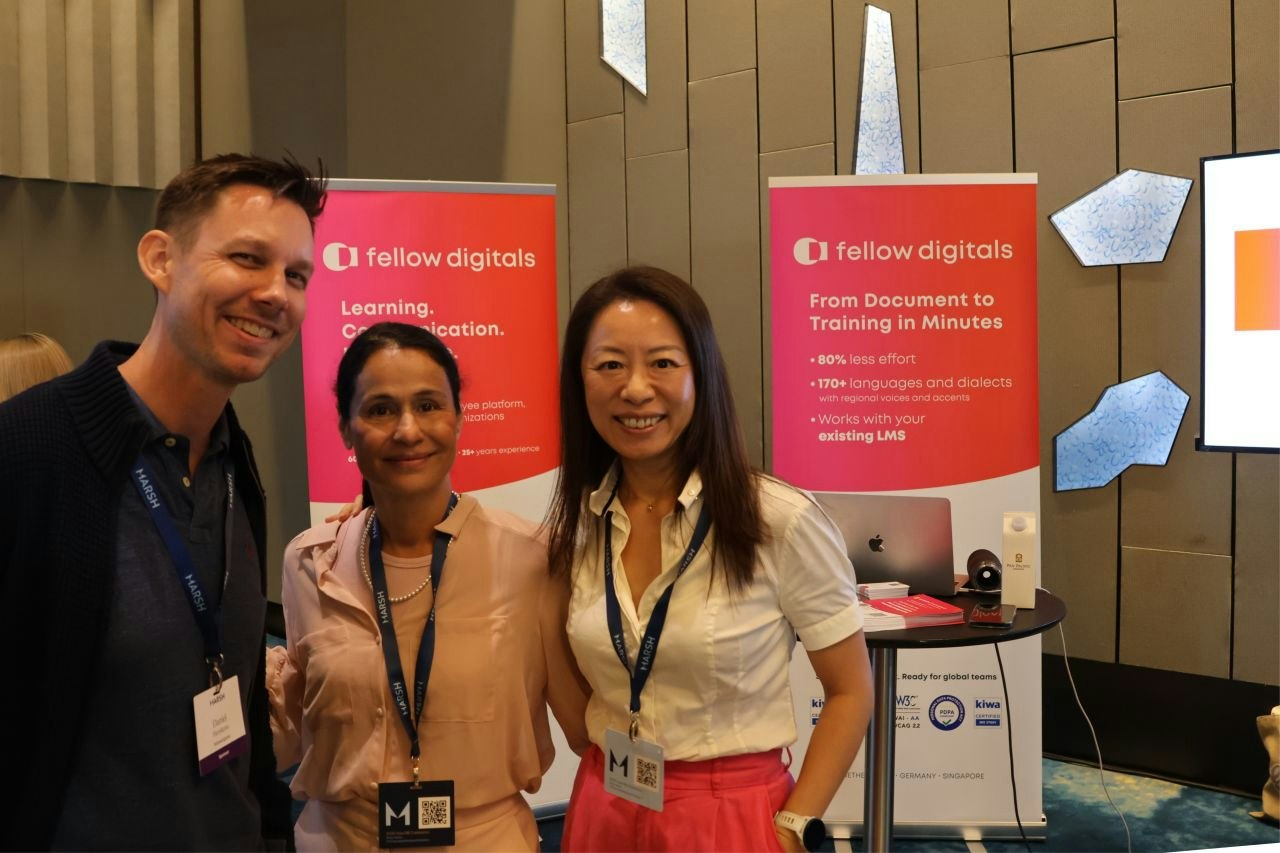
Skills become part of how the business operates
In our previous article, we explored the scale of the reskilling challenge. The conference in Singapore added an important conclusion: when work is constantly changing, skills development can no longer consist of occasional training. It must become part of how the organisation operates.
Mercer's global research shows why. Of the executives surveyed, 65% expect that 11% to 30% of employees will need to be reskilled or redeployed internally because of AI over the next two years. At the same time, 59% of HR leaders identify attracting people with essential digital skills as their biggest workforce challenge. Hiring new talent alone will not solve that shortage. Organisations need an up-to-date view of the skills they have, what their strategy will require and which employees can develop or move into different work.
This also changes the role of learning. A fixed training catalogue assumes that roles and knowledge remain stable long enough for people to complete a programme first and apply what they have learned afterwards. AI shortens that cycle. Processes change, tools gain new capabilities and organisational knowledge needs to be updated more frequently.
Learning therefore needs to become easier to adapt. The same source document might become a short course for one team, a practical instruction for another and a translated version for colleagues in a different country. Employees need support that fits their role and is available when they need it. HR and L&D also need to see whether employees actually apply what they have learned, rather than measuring completion rates alone.
What HR and learning professionals can do now
The move from AI adoption to work redesign begins with four practical questions:
Redesign the work Which outcomes need to improve, which tasks can AI support and where must people continue to exercise judgement and take responsibility?
Map the skills gap What do employees and managers need to know or be able to do differently in the redesigned workflow?
Adapt learning to different roles How can organisational knowledge be turned into relevant support for different functions, situations, languages and locations?
Measure what actually changes Are people applying the new skills, making better decisions and using the time freed up for higher-value work?
These questions connect technology choices with strategic workforce planning, learning and day-to-day management. They also make the purpose of AI more concrete for employees. People can see what is changing, why it is happening and how the organisation will support them.
Learning must move with the work
AI can already take over much of the manual work involved in turning existing knowledge into learning content and adapting it for different audiences. This is particularly useful for organisations working across multiple teams, languages and locations. The greater opportunity lies in learning that can respond more quickly to changing roles and skills.
Fellow Digitals helps organisations bring learning closer to the work. With Fellow LMS and the AI Course Generator, existing documents can be turned into short learning modules, adapted for different audiences and shared across the organisation. This allows HR and L&D to adjust their learning offering more quickly as work changes, without having to rebuild every course from scratch.
AI should enable more than faster work. It should give people more room for the contribution technology cannot replace, along with the knowledge and confidence to use that room well.

We love to share our knowledge with you
Related blogs
-

Nextcloud: Europe’s answer to Microsoft 365?
-
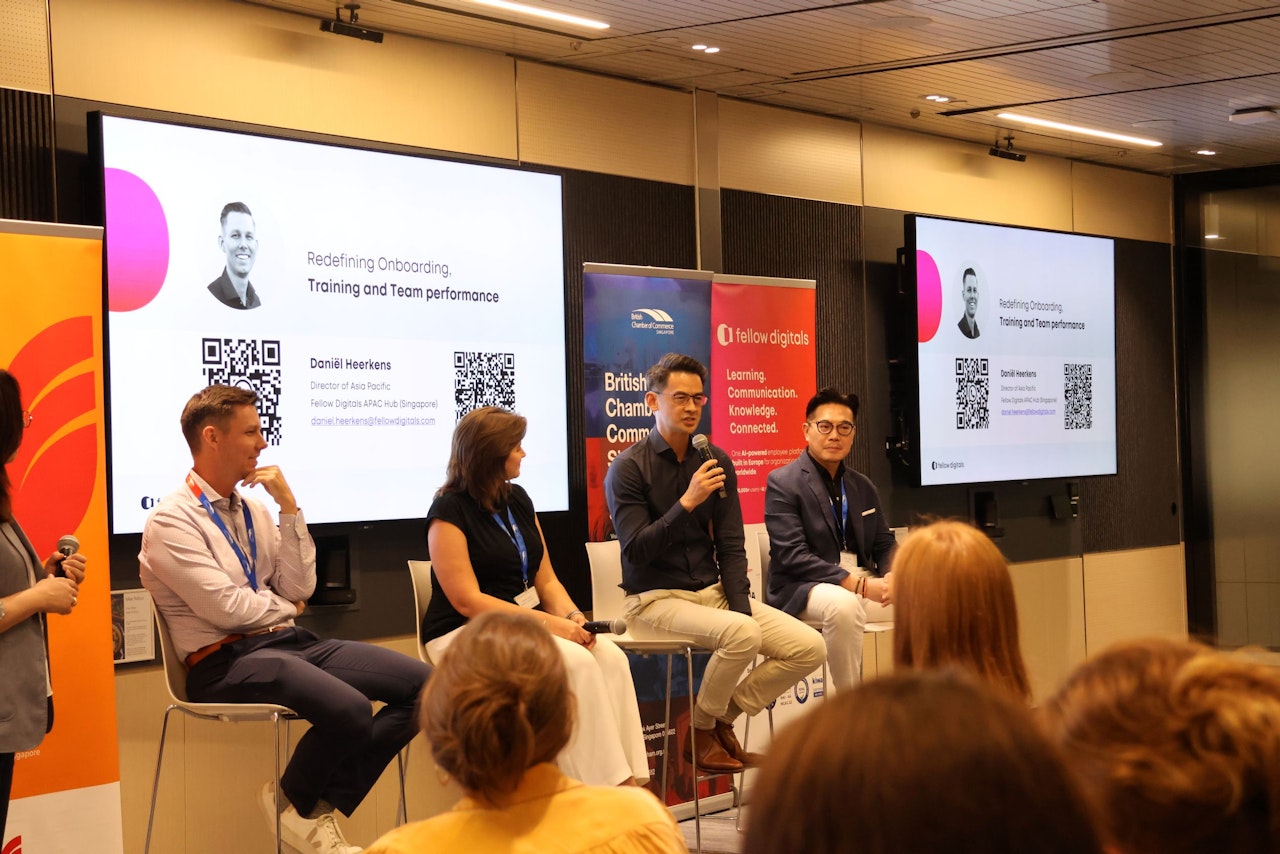
Together with DutchCham, BritCham Singapore and Deel, Fellow Digitals took the stage in Singapore to explore AI, skills and the future of work. One in five employees will need reskilling: is HR ready for the AI transition?
-
Data Sovereignty vs. Data Residency: What's the Difference?