One in five employees will need reskilling: is HR ready for the AI transition?
Blog | HR transition
AI is not only changing which jobs organisations need, but above all how work is performed. Tasks are shifting, employees are beginning to collaborate with digital assistants and knowledge is becoming outdated more quickly. A standalone AI training course is no longer enough. Which employees need upskilling or even reskilling? Which skills will be required in the future? And what role should HR play?
In this blog, we examine the figures, what the AI transition requires from HR in practice and the five steps organisations can take today. We also look at Singapore, where government, employers and education providers are already working together systematically to build a skills-first labour market – an inspiring example of how these challenges can be addressed in practice.
The figures behind the reskilling challenge
According to the World Economic Forum’s Future of Jobs Report 2025, employers expect that 19% of employees will need to be reskilled and redeployed within their organisation by 2030. The wider picture is even more urgent: 59% will require some form of upskilling or reskilling. For every 100 employees, employers expect that:
41 will not require substantial training;
29 will need to be upskilled within their current role;
19 will need to be reskilled and redeployed internally;
11 will require training but are unlikely to have access to it.
AI is not the only cause. Automation, digitalisation, demographic change and the green transition also play a role. However, AI is an important driver: 77% of the employers surveyed plan to upskill or reskill employees so they can work more effectively with AI.
As tasks change, so does the role of HR
Discussions about AI often focus on jobs disappearing. The International Labour Organization presents a more nuanced picture: globally, one in four jobs is exposed to generative AI to some degree. In high-income countries, this applies to 34% of jobs. However, the most likely outcome is not that entire roles will disappear, but that the tasks within those roles will change.
As a result, HR’s challenge is shifting from managing people and roles to managing skills and organisational capability. Which tasks will remain human, which will be supported by AI, which will disappear and which new skills will be required? Addressing these questions requires a direct connection between strategic workforce planning, learning, internal mobility and everyday work.
The AI transition requires more than training
A basic ChatGPT course can be useful, but it does not constitute a reskilling strategy. Employees want to understand what AI means for their own work, which applications they can use safely and how they should assess AI-generated output. Managers must then be able to translate these changes into the day-to-day reality of their teams. The AI transition is therefore also a challenge involving change management, communication and trust.
This is particularly relevant because AI is driving explosive growth in the volume of content. Courses, instructions, summaries and videos can be produced faster than ever. But employees do not automatically need more content. What they need is the right knowledge, relevant to their role and available at the moment they need it in their work. Attention, context and relevance are becoming scarcer than content.
Fellow Digitals makes learning part of everyday work
At Fellow Digitals, we believe that learning cannot be separated from communication and organisational knowledge. A modern learning platform should do more than simply provide access to courses. It should support targeted learning paths for different roles, make development visible, keep knowledge up to date and connect learning with everyday work. Not more content for everyone, but relevant support for each individual.
This approach is not only relevant within individual organisations. When skills change rapidly across entire sectors, the same question arises on a larger scale: how can governments, employers and education providers work together to ensure that people can develop in time and transition into new roles?
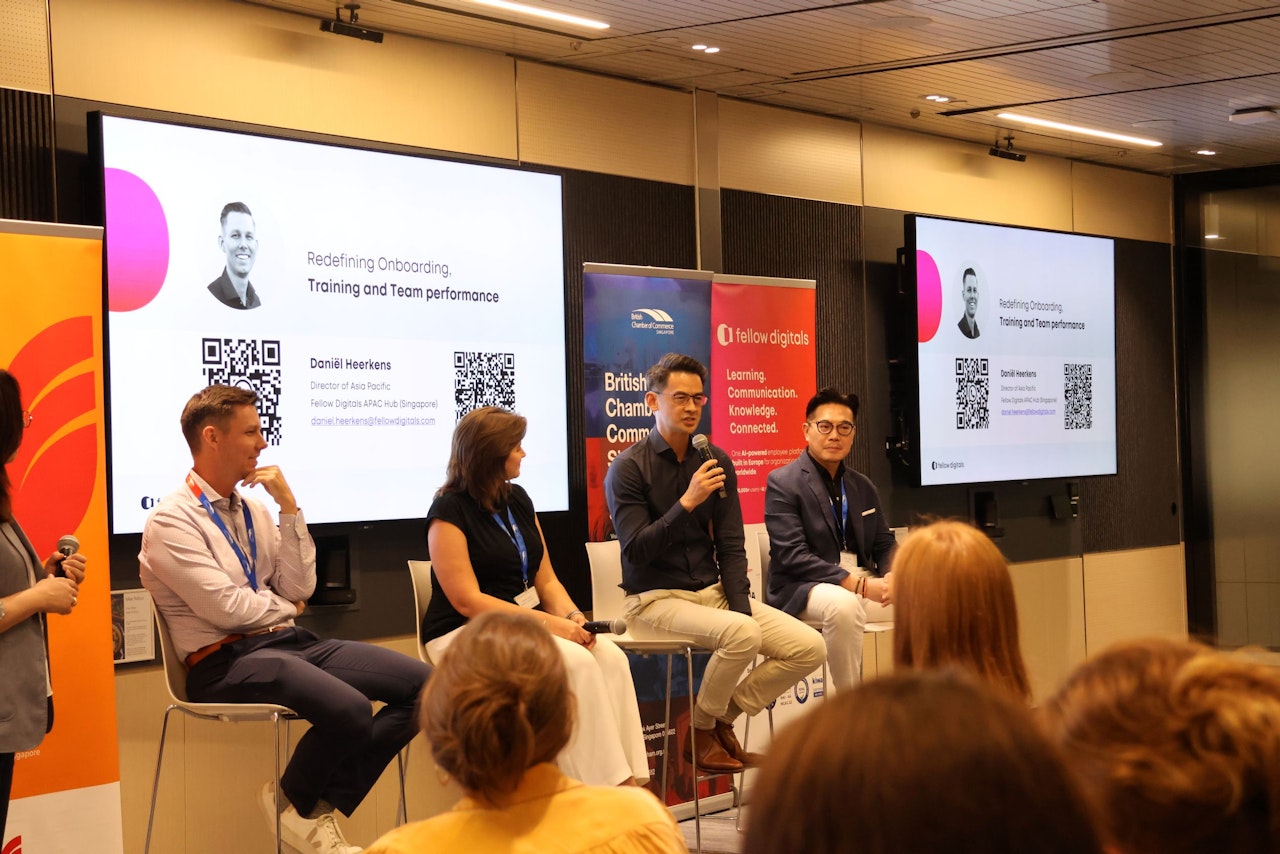
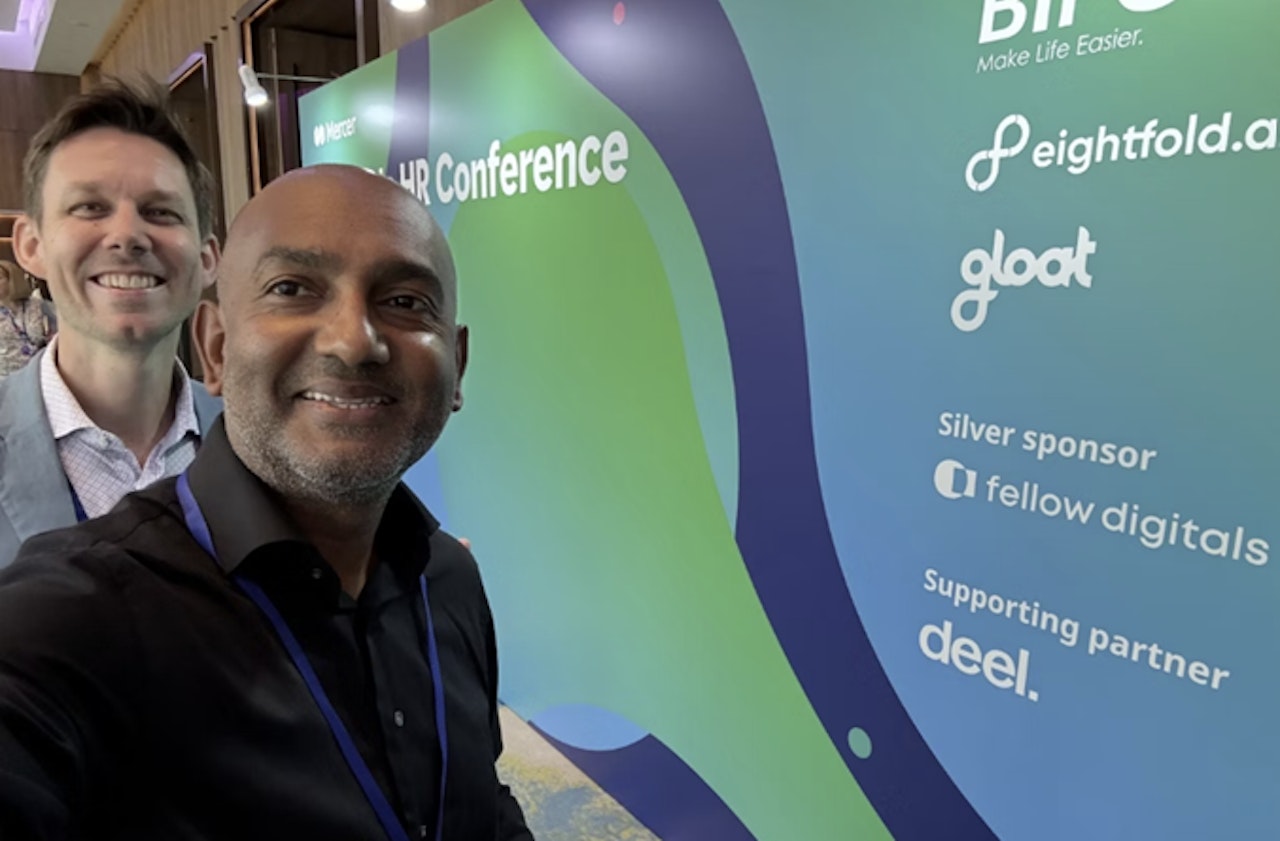
In Singapore, we discussed precisely this question with HR leaders: how can organisations prepare their workforce for the future? It is no coincidence that we are having this conversation there. From our office in Singapore, we see first-hand how the country is organising skills development systematically. We believe this approach can also inspire organisations and policymakers in other parts of the world.
What the rest of the world can learn from Singapore
Singapore has been investing in a skills-first economy for many years, with government, employers, trade unions and education providers working closely together to develop people’s capabilities. Faced with an ageing workforce, rapid technological change and the transition towards a digital and green economy, the country cannot afford to wait until roles have already changed before taking action. Singapore therefore organises skills development systematically at a national level.
Through its national SkillsFuture initiative, Singapore has been investing since 2015 in a labour market where skills carry more weight than qualifications or job titles. The country uses a common language for skills and up-to-date labour market data. Training programmes are linked to specific skills, enabling people to develop more purposefully or transition into new roles.
From standalone training to targeted development
Singapore shows what becomes possible when skills development is organised systematically and different stakeholders work with a shared language and common objectives. HR can apply the same approach within its own organisation. These five steps provide a practical starting point:
Identify which tasks within each role will remain, change or be supported by AI.
Determine the skills gap between employees’ current capabilities and what the organisation will need in the future.
Develop learning paths for each role instead of offering one generic AI course to everyone.
Combine formal learning with practical experience, coaching, knowledge sharing and support from managers.
Measure not only completion, but above all application, confidence and impact.
The real question for HR
The question is not whether HR can offer more training. It is whether HR can help the organisation learn faster than work is changing. That requires insight into skills, reliable knowledge, strong managers and a learning environment that brings development closer to everyday work.
Organisations that get this right do more than improve workforce employability and internal mobility. They also build trust. After all, the AI transition will only truly succeed when employees understand what is changing, know what is expected of them and are given the opportunity to grow alongside it apply to that data. Together, those answers provide a much clearer picture of how carefully a provider handles your information
👉 Want to discover how we can support learning and development in your organisation? Explore Fellow LMS and see what the platform could mean for your organisation.

We love to share our knowledge with you
Related blogs